呢part好多老闆都唔為意。當香港有人 search「銅鑼灣 facial」,或者問 ChatGPT「旺角邊間餅店好」,Facebook 帖通常都唔會出現。Google 同 AI 工具係讀網站嘅。佢哋會睇你啲版面、你啲服務、你喺邊區、仲有啲評價,先決定畀唔畀你出。一個乾淨、快、版面清楚嘅網站,就係畀啲未 follow 你嘅人搵到你嘅方法。社交動態多數只係接觸到啲喺第度先認識你嘅人。
預設就係雙語,因為香港本身就係雙語
一間香港店舖如果淨係得英文,或者淨係得中文,等於趕走咗成條街一半人。有啲客用繁體中文搵,有啲用英文,好多更加會兩種撈住用。雙語網站令每個人都睇得舒服,又令 Google 同 AI 兩種搜尋都配對到你。所以 SearchGecko 整每個網站都係繁體中文加英文做標準,唔係要加錢先有。你唔應該要揀同香港邊一半人講嘢。
網站幫你接 booking
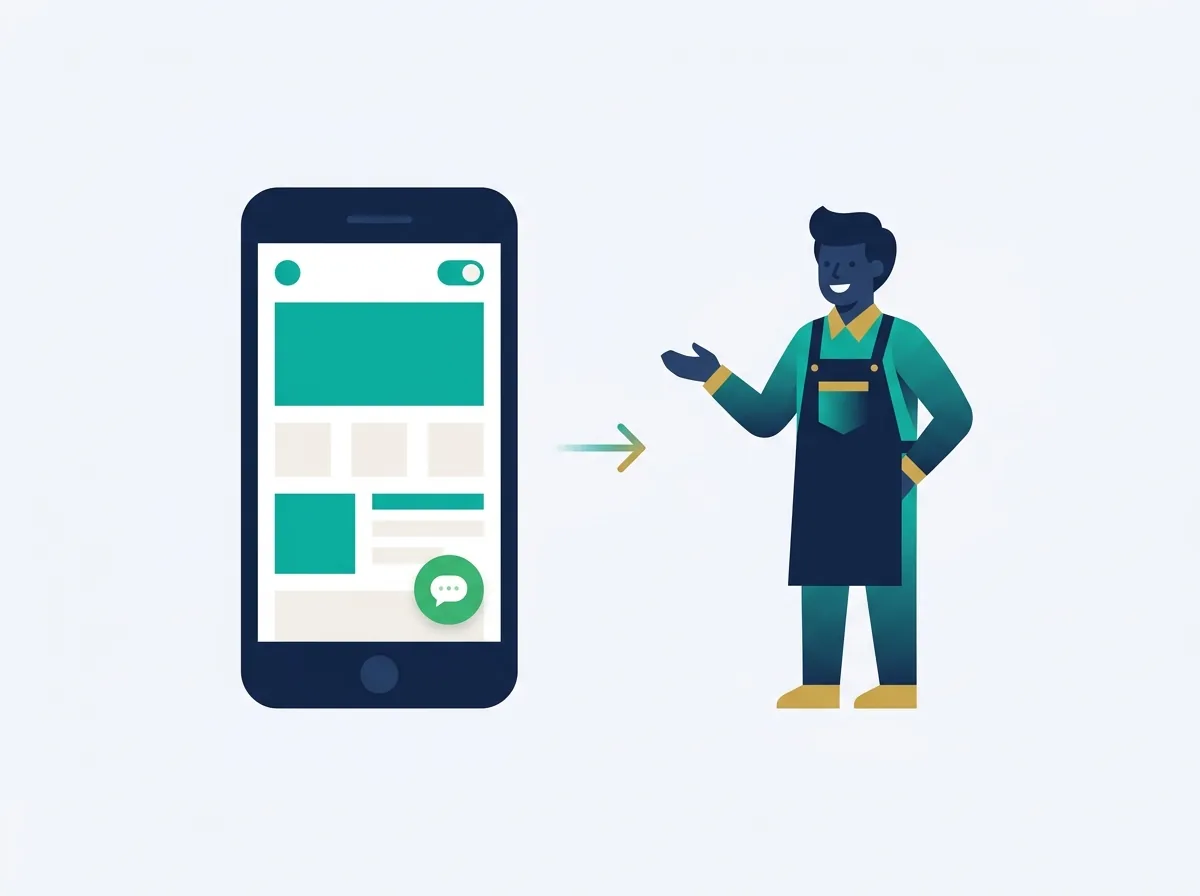
一個好網站唔係一張擺喺度唔郁嘅單張。佢會擺個 WhatsApp 掣畀人 tap 一下就 message 你,顯示你嘅營業時間同地區,仲答到你日日都被問嘅問題。咁即係少咗啲「禮拜日開唔開」嘅查詢,多咗真正嘅 booking。客人仲可以喺半夜、你落咗閘返咗屋企之後,喺個網站睇到你啲價錢、餐牌或者服務清單。你剪緊頭髮、沖緊咖啡、睇緊症嘅時候,個網站就靜靜哋幫你做嘢,連公眾假期或者 T8 風球落閘嗰陣都繼續做。
A Facebook page is a good start, but it is not your own. A proper bilingual website is the one place online that you control, that shows up on Google and AI search when people look for a shop like yours, and that lets customers book you on WhatsApp in seconds. A social page does none of those three things well, which is why most small Hong Kong shops eventually need both.
You own a website, you only rent a social page
When you build on Facebook or Instagram, the platform owns the rules. It decides who sees your posts, it can change the layout overnight, and it can suspend your page with little warning. Your followers are really their followers. A website is different. The address is yours, the content is yours, and nobody can switch it off because an algorithm changed. For a salon in Kwun Tong or a café in Sham Shui Po, that ownership matters: it is the difference between renting a market stall and holding the keys to your own door.
Google and AI search send you new customers, social pages do not
Here is the part many owners miss. When someone in Hong Kong searches "facial near Causeway Bay" or asks ChatGPT "which bakery in Mong Kok is good", a Facebook post almost never shows up. Google and AI tools read websites. They look at your pages, your services, your area, and your reviews, then decide whether to show you. A clean, fast website with clear pages is how you get found by people who do not already follow you. A social feed mostly reaches people who found you somewhere else first.
Bilingual by default, because Hong Kong is bilingual
A Hong Kong shop that only has English, or only has Chinese, is turning away half its street. Some customers search in 繁體中文, some in English, and many switch between the two. A bilingual website lets each person read comfortably and lets Google and AI match you to both kinds of searches. This is why SearchGecko builds every site in 繁體中文 and English as standard, not as a paid extra. You should not have to choose which half of Hong Kong to talk to.
A website does the booking for you
A good site is not a brochure that just sits there. It puts a WhatsApp button where people can tap to message you, shows your opening hours and your area, and answers the questions you get asked every day. That means fewer "are you open on Sunday" messages and more actual bookings. It also means a new customer can find your prices, your menu, or your service list at midnight, long after you have closed the shutter and gone home. The site quietly works while you are cutting hair, pulling coffee, or seeing patients, and it keeps working on a public holiday or during a typhoon T8 when your door is shut.
The honest part is cost. Traditional Hong Kong agencies often charge HK$18,000 to HK$35,000 for a standard site, which is hard for a small shop to justify. SearchGecko builds bilingual websites from HK$3,800 for a Starter site of up to three pages, the build is one time, and you own it outright. You can see the full range on the websites service page. Keep the Facebook page for daily chat and photos. Let the website be the part that gets you found, gets you trusted, and gets you booked.
想搵人幫你搞掂?Want this handled for you?
免費、無約束嘅 Google + AI 搜尋檢查。睇吓你而家喺邊,同點樣做得更好。A free, no obligation Google and AI search check. See where you stand and how to do better.